If you filed for a renovation permit in Georgetown this month, you are waiting on a board that is not meeting. The Old Georgetown Board convenes on the first Thursday of every month except January and August. August 2026 is one of those two blank months on the calendar, which means anyone who wanted a rear addition or a roof replacement cleared before fall listing season just lost four to six weeks they may not have budgeted for.
Most sellers assume Georgetown's historic-district rules work the way they do everywhere else in DC: file with the city, wait on the Historic Preservation Review Board, get your certificate, pull your permit. That is how it works in Capitol Hill and Kalorama Heights. It is not how it works in Georgetown. The neighborhood answers to a federal review process that predates DC's home rule government by two decades, and it changes how a seller should sequence renovation against a listing date.
The Board Most Georgetown Owners Have Never Heard Of
The Old Georgetown Act of 1950 (Public Law 81-808) created a federal historic district in Georgetown and handed design review authority to the U.S. Commission of Fine Arts, the same body that weighs in on monuments and federal buildings elsewhere in the city. CFA delegates the actual case work to an advisory panel of three architects called the Old Georgetown Board, or OGB.
Here is the part that catches people off guard. According to DC's own Office of Planning, HPRB does not usually review Georgetown projects considered by CFA. If your work is visible from a public street or alley, which covers the large majority of exterior construction in the neighborhood, the OGB and CFA are the ones deciding whether your design is compatible with the district, not the city board that reviews everyone else's rowhouse. HPRB and its staff at the Historic Preservation Office only pick up the exterior work that CFA determines isn't visible from public space.
That distinction matters because the two boards do not run on the same clock, and they do not always apply identical standards. DC's planning office is direct about this: the preservation and design standards used by CFA and OGB are similar but not identical to HPRB's, and sign regulations in particular are more restrictive in Georgetown than elsewhere in the district.
One Process, Not the Rest of the City's Process
| Neighborhood | Who reviews street-visible exterior work | Legal basis |
|---|---|---|
| Capitol Hill | DC Historic Preservation Review Board (HPRB) | DC historic preservation law |
| Kalorama Heights | HPRB | DC historic preservation law |
| Georgetown | Old Georgetown Board, ratified by the Commission of Fine Arts | Old Georgetown Act of 1950, a federal statute |
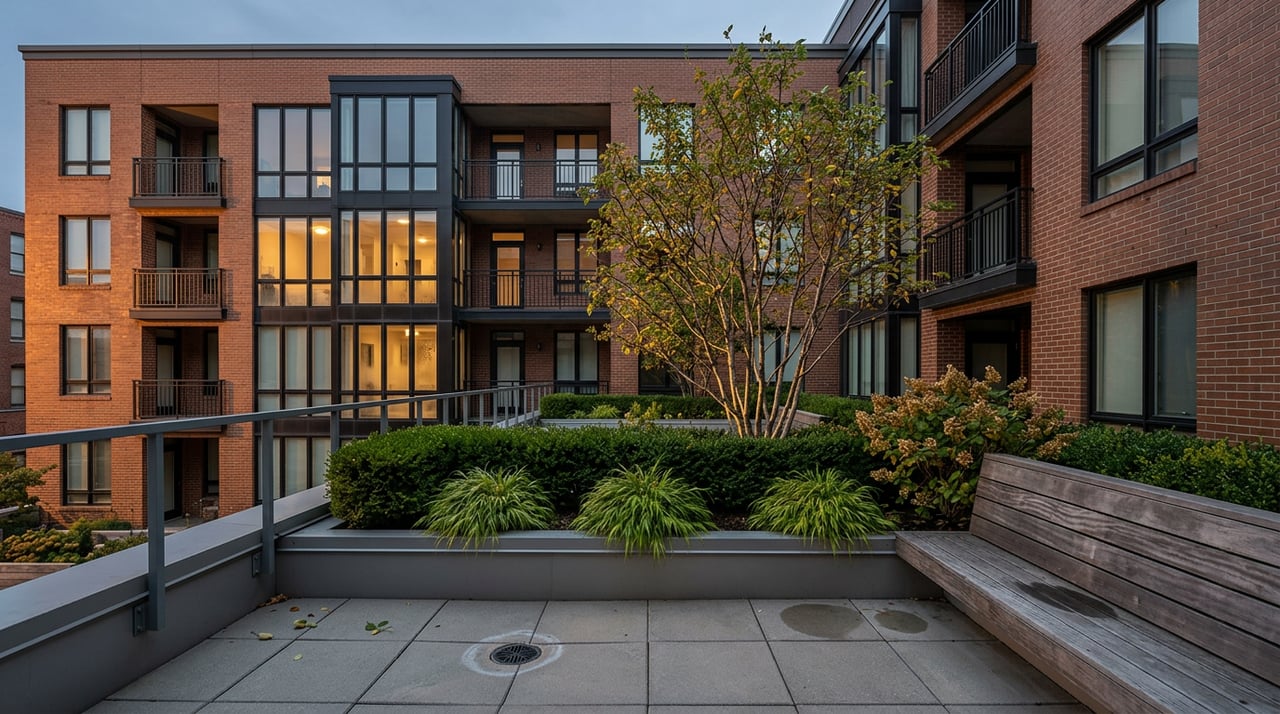
A seller comparing a Capitol Hill listing to a Georgetown one is often comparing two different regulatory systems without realizing it. The renovation contractor who tells you "I've done six of these on the Hill, no problem" may be describing a process that has nothing to do with the one your Georgetown address requires.
How Granular "Compatible" Actually Gets
The OGB's monthly case record, published by CFA, reads less like a zoning memo and more like a running argument over materials. A few examples from the board's 2026 docket show what applicants are actually negotiating.
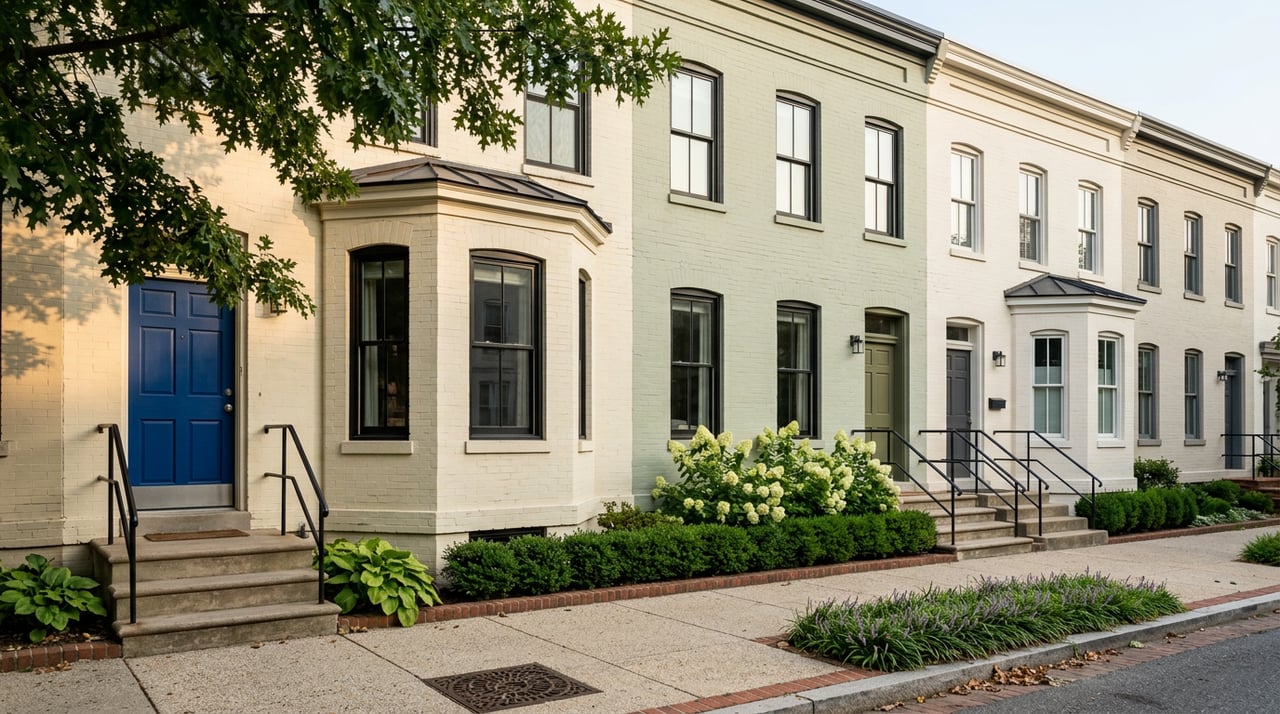
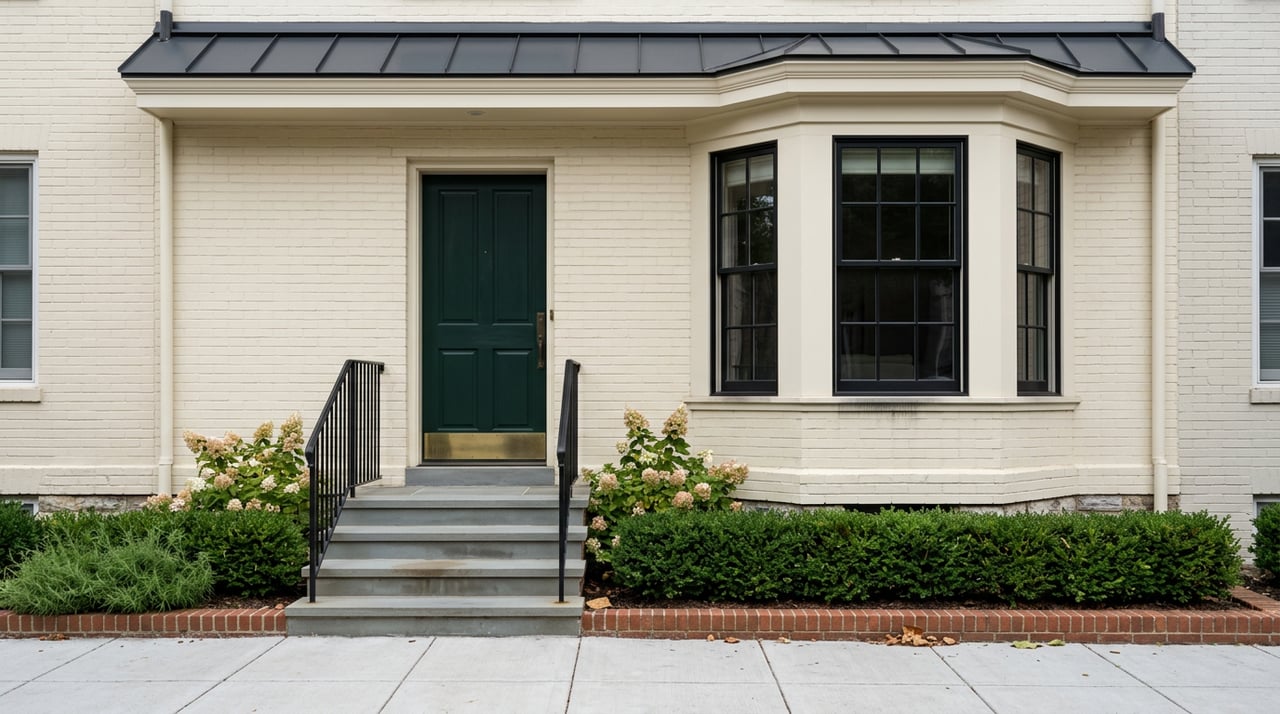
One rear addition was approved only after the applicant agreed the new roof would be hand-crimped metal, both chimneys would be retained, and the replacement windows and doors would be simulated-divided-lite units with putty profile muntins. Another case, a stoop reconfigured from side-facing to street-facing, cleared review provided the existing stone sill and pilasters were kept, the new bluestone treads were a specific three inches thick, and the railing's masonry penetrations lined up with existing mortar joints rather than cutting new ones. A membrane roof replacement was rejected outright in favor of matching the existing double-lock standing-seam metal roof down to the seam height and panel width.
Signage draws its own level of scrutiny. The board capped illuminated letter height at 12 inches for a storefront sign reading Flavor Hive, required a Malbon storefront to strip unapproved vinyl signage and repair damage from a prior unpermitted sign before its replacement could be approved, and recommended against a Uniqlo sign application entirely, calling the proposed signage redundant. Streatery approvals for Clyde's and for Hershey's Ice Cream came with conditions that any planters use live plants rather than artificial ones. A large office-to-residential conversion at a former flour mill generated line-by-line debate over brick blend percentages and mortar undertones before the board would sign off.
None of this is arbitrary pickiness. It is the practical result of a federal statute written specifically to protect Georgetown's streetscape, applied case by case, at a level of detail that a generic DC historic-district guide will not prepare you for.
The Calendar That Doesn't Bend for Your Listing Date
The OGB's schedule is fixed and public, which is useful for planning but unforgiving if you miss a step. The board meets once a month, the first Thursday, except January and August. Filings are due at the Department of Buildings three weeks before that meeting. After the board reviews a case, either at its public meeting or on a streamlined consent calendar for straightforward requests, its recommendations are compiled into an Old Georgetown Appendix. That appendix does not become final until CFA formally approves it at CFA's own meeting, which happens two weeks after the OGB meeting. Your project is not cleared, and DC will not issue a construction permit, until that second approval lands.
Run the math on a project filed today. With no OGB meeting in August, the earliest a filing could reach the board is the first Thursday of September. Assuming a straightforward case moves to the consent calendar, CFA ratification follows roughly two weeks later, putting the earliest possible sign-off in late September, before a building permit application even goes to DC's Department of Buildings for its own review. A rear addition or a visible roof replacement that a seller hoped to complete before winter photography can lose a month to the calendar alone, before construction starts.
Skipping the process is not a shortcut. CFA's own case record includes an after-the-fact approval for signage that had already gone up without review, and it came with a requirement to remove other unapproved elements and repair damage from the earlier unpermitted work. Unpermitted exterior changes in a federal historic district create a paper trail that shows up in due diligence, and buyers' agents in Georgetown know to ask about it.
What This Means If You're Selling or Buying to Renovate
For a seller weighing a pre-listing renovation, the practical takeaway is sequencing. Interior work, kitchens, baths, systems, generally does not require OGB or CFA review at all since the process focuses on what is visible from public space. If your improvement plan is entirely interior, the Georgetown-specific calendar does not apply to you. But if the plan includes anything visible from the street or alley, a roof, a stoop, a rear addition tall enough to read from an alley, a new storefront if you're selling mixed-use, you are on the OGB's calendar, not a generic renovation timeline, and that calendar has fixed monthly checkpoints rather than rolling approvals.
For a buyer planning to renovate after closing, the same math applies in reverse. Before you write a contingency around a rear addition or a roof deck, ask whether the work is visible from a public street or alley. If it is, build the OGB's monthly cadence and the two-week gap to CFA ratification into your own timeline rather than your contractor's general DC estimate.
Anyone weighing whether to renovate before listing or price the home as-is can start with our neighborhood guide to Georgetown, which covers what buyers in this market are actually responding to right now.
A Few Direct Questions
Does this apply to work I can't see from the street, like a kitchen remodel? Generally no. CFA's authority is limited to construction visible from a public street or alley. Work that isn't visible from public space falls to HPRB and HPO instead, following DC's standard historic preservation process.
What if I already have HPRB approval from before I understood the CFA process applied? DC's Office of Planning notes that HPO handles the intake and transmittal of applications with CFA for Georgetown review, so if your property sits inside the Old Georgetown Act boundary, your application needs to route through that channel regardless of what a general HPRB conversation may have suggested.
Can I appeal an OGB or CFA decision I disagree with? A concept-stage recommendation is not a final action and cannot be appealed. A final permit decision can be appealed through the District of Columbia's standard process, though CFA notes that if the board recommends against a permit, the more common path is to revise and resubmit.
Georgetown's rules reward sellers and buyers who plan around the calendar instead of discovering it mid-project. If you're weighing whether a visible renovation is worth the timeline before you list, or you want a read on what your home is worth as it sits today, Carol Kennedy can walk through the numbers and the process together. Request a free home valuation to start the conversation.